 Help & Advice:


Multi-Fuel Stoves vs. Wood-Only Stoves: Which Is Right for You?
When it comes to choosing a stove for your home, the decision often boils down to a multi-fuel stove or a wood-only stove. Many customers believe that a multi-fuel stove offers the best of both worlds. While this can be true, there are distinct advantages and disadvantages to each type that you should consider before making your decision.
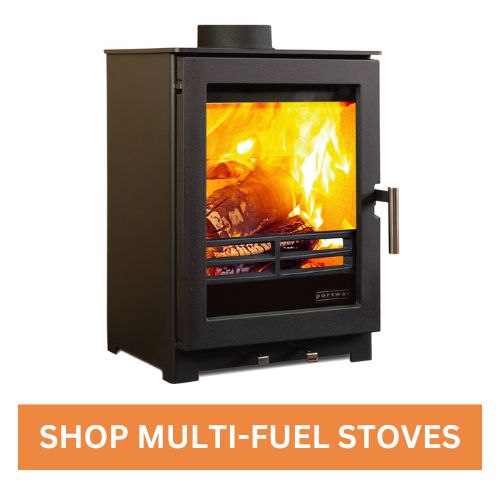
Multi-Fuel Stoves
A multi-fuel stove is designed to burn a variety of fuels, including wood, coal, and smokeless fuel. This versatility makes it a popular choice for many homeowners. Here are some key points to consider:
- Fuel Options: The main advantage of a multi-fuel stove is its ability to burn different types of fuel. This flexibility allows you to choose the most economical or readily available fuel at any given time.
- Burn Time: When burning coal, a multi-fuel stove tends to have longer burn times, meaning you won’t need to load fuel as frequently. This can be a significant convenience, especially during colder months.
- Maintenance: One downside is that burning coal produces more ash, which means the stove will require more frequent cleaning. The ash must be regularly removed to maintain efficient combustion.
Design Specifics:
- Slotted Grate: Multi-fuel stoves feature a slotted grate to facilitate airflow from underneath, which is necessary for coal combustion. However, this design can be less efficient for burning wood, as the wood ash falls through the grate into the ash pan before it has a chance to re-burn. This leads to more frequent cleanings and potentially less efficient burning.
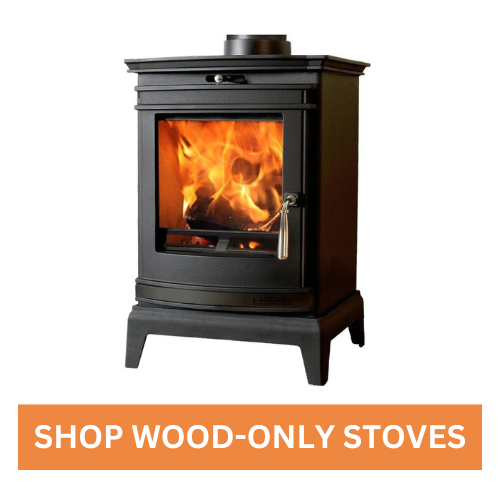
Wood-Only Stoves
A wood-only stove, as the name suggests, is designed specifically for burning wood. This type of stove has its own set of benefits and drawbacks:
- Ease of Use: Wood is generally easier and more pleasant to handle compared to coal. It also produces a lovely aroma and ambience, which many people find appealing.
- Cleaning: Wood-burning stoves require less frequent cleaning than multi-fuel stoves because the ash produced by wood can re-burn, reducing the overall amount of ash that needs to be removed.
Design Specifics:
- Solid Base: Wood-only stoves have a solid base, allowing a bed of ash to build up. This bed of ash helps maintain high core temperatures, promoting more efficient burning. The result is less frequent cleaning and more complete combustion of the wood.
Which Stove Is Right for You?
Choosing between a multi-fuel stove and a wood-only stove ultimately depends on your specific needs and preferences.
- If you value versatility and the option to choose between different types of fuel, a multi-fuel stove may be the better choice.
- If you prefer the simplicity and efficiency of burning wood, along with less frequent maintenance, a wood-only stove might be more suitable.
Conclusion
Both multi-fuel stoves and wood-only stoves have their unique advantages and potential drawbacks. Understanding these can help you make an informed decision that best fits your lifestyle and heating needs. Whether you opt for the flexibility of a multi-fuel stove or the straightforward efficiency of a wood-only stove, you'll be able to enjoy the warmth and comfort of a cosy fire in your home.
.png)
.png)
.png)
.png)
.png)
.png)
.png)